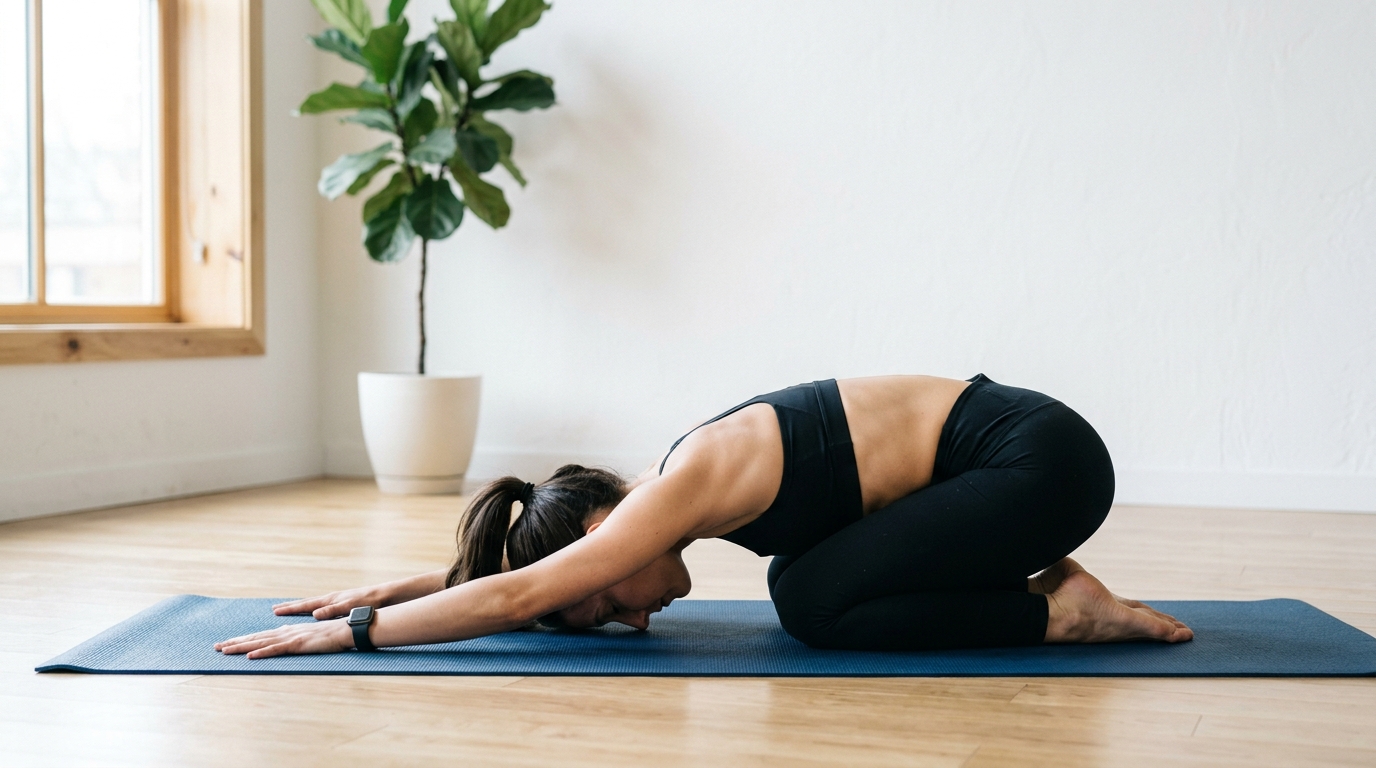
NERVE GLIDE Chair / Seated • Beginner
Discs: L4-L5, L5-S1
Seated Sciatic Nerve Flossing (Dural Glide)
Nerve flossing (or neural mobilization) glides the sciatic nerve back and forth through the neural foramina and deep gluteal tissues without pulling it into excessive tension. This restores blood flow to the nerve and reduces shooting pain.
BIOMECHANICAL MOVEMENT DIAGRAM
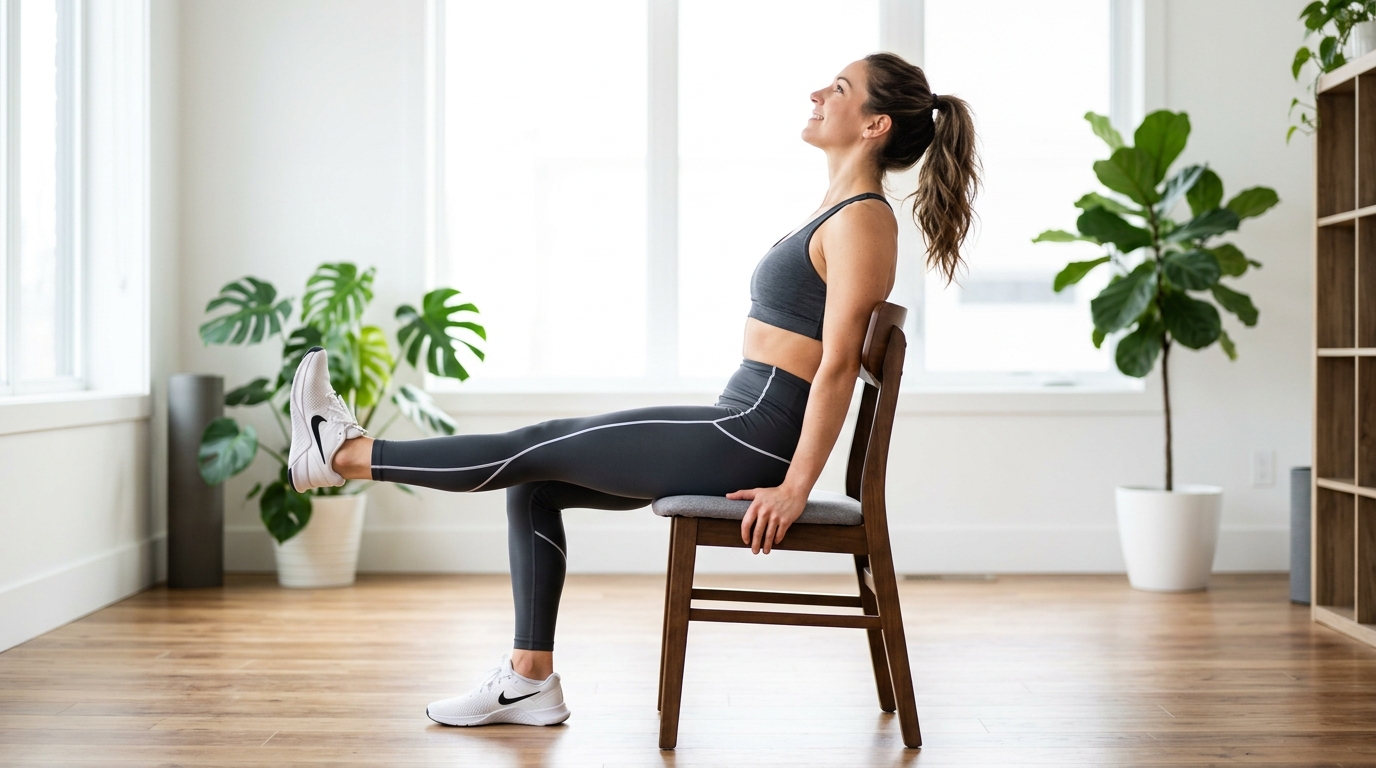
DURAL NERVE FLOSS
🎯 Sciatic Mobility
Step-by-Step Execution
CLINICAL PROTOCOL- 1 Sit tall on the edge of a sturdy chair with feet flat and hands resting on your thighs.
- 2 As you straighten your affected leg forward and flex your toes toward your nose, tilt your head backward looking up at the ceiling.
- 3 Then, as you bend your knee back down, lower your chin down toward your chest.
- 4 Coordinate the movement rhythmically: leg extends as head tilts up; leg bends as head tucks down.
- 5 Perform 12 to 15 continuous, smooth cycles. Never hold in maximum stretch tension.
🎯
KEY FORM CUES
- ✓ Move smoothly like a gentle wave; this is a nerve slider, not a static muscle stretch.
- ✓ Stop short of any tingling, shooting, or electric sensations.
⚠️
MISTAKES TO AVOID
- ✗ Do not flex the ankle while tucking the chin down at the same time (this creates excessive tension).
- ✗ Avoid fast, jerky movements.
🛑
CONTRAINDICATIONS & WHEN TO AVOID
Do not perform this movement or modify strictly under clinical supervision if you have:
- Severe acute progressive neurological deficit (foot drop, sudden loss of strength)
- Acute Cauda Equina symptoms
SCIENTIFIC FOUNDATIONS & CITATIONS
Clinical Biomechanics & Evidence
This exercise protocol utilizes proven spinal mechanics: active core co-contraction (McGill stabilization), directional preference extension (McKenzie MDT), and non-compressive axial elongation to facilitate nutrient exchange in the avascular intervertebral disc matrix.
• McGill, S.M. (2016). Low Back Disorders: Evidence-Based Prevention and Rehabilitation. Human Kinetics.
• Delitto, A., et al. (2021). Low Back Pain Clinical Practice Guidelines. Journal of Orthopaedic & Sports Physical Therapy (JOSPT).
CLINICAL DOSAGE
Hold Duration 2 Seconds
Repetitions 12-15 glides per side
Prescription Sets 2 sets
Difficulty Beginner
Position Chair / Seated
TARGET MUSCLES
Sciatic Nerve Tract Hamstrings
STABILIZER MUSCLES
Gastrocnemius Spinal Dura